PROPERTY VALUATIONAI-Powered Property Valuation Platform — Automated Real Estate Cost Modeling Software
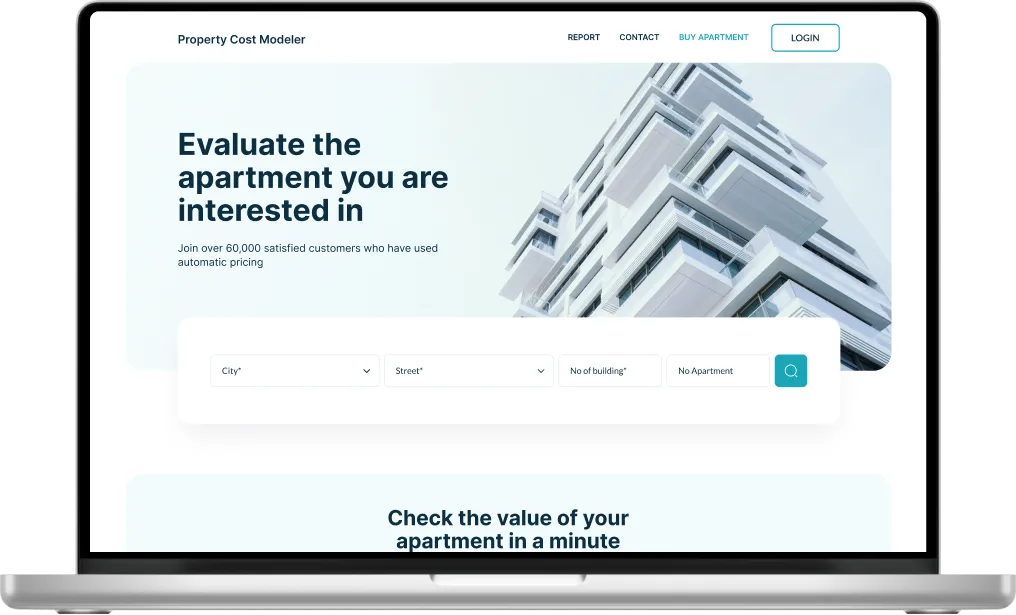
In the fast-evolving Polish real estate market, accurate property valuation is essential for buyers, sellers, and investors. This custom AI-powered property valuation platform delivers automated apartment appraisals in under a minute, leveraging machine learning models trained on Poland's largest property transaction database — over 7.5 million notarial acts covering approximately 95% of all market transactions.
Scope of work
Web development
React JS
Data Science & ML
Node JS
AWS Cloud
Building an AI-Driven Property Valuation Platform
Our collaboration with a leading Polish proptech company specializing in real estate data analytics marked the beginning of this ambitious project. The client had accumulated years of expertise in property market analysis and needed a scalable, consumer-facing platform that could democratize access to professional-grade property valuations previously available only through expensive manual appraisals.
The platform was designed as a comprehensive property cost modeling solution that combines advanced AI algorithms with an extensive transaction database. Beyond simple price estimation, the system delivers detailed valuation reports including comparable sales analysis, neighborhood safety metrics, rental profitability projections, and hyperlocal market trend analysis — empowering users with the data they need to make confident real estate decisions.
Engineering Real-Time AI Valuations at Scale
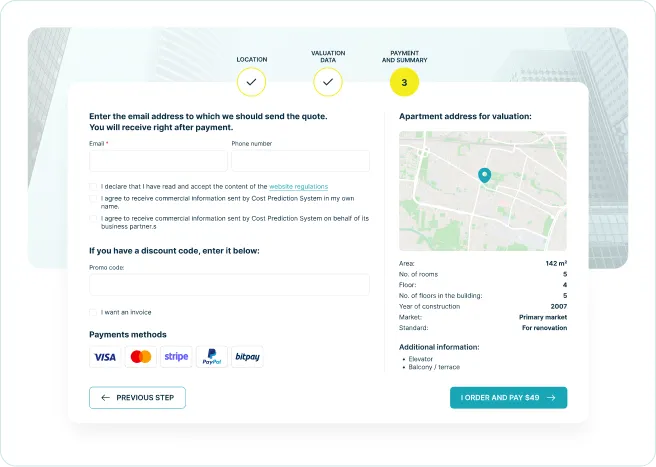
The primary challenge was building a real-time property valuation engine capable of processing complex AI/ML models against millions of transaction records and returning accurate results within seconds. The system needed to handle concurrent valuation requests while maintaining consistent response times across 27 Polish cities.
Expertises
Real Estate & Prop-tech
Location
Poland
Democratizing Professional Property Appraisals
The primary goal was to create a consumer-facing property valuation platform that delivers professional-grade apartment appraisals instantly and affordably. The client needed to transform their deep real estate data expertise into a self-service product accessible to everyday buyers, sellers, and investors.
The platform had to support a scalable report generation system — from individual one-off valuations to bulk packages of 10-100 reports for professional users. The pricing and delivery model needed to accommodate both casual consumers and real estate professionals with different usage patterns.
A key objective was building a machine learning pipeline that continuously improves valuation accuracy by incorporating new transaction data as it becomes available. The AI models needed to account for hyperlocal factors — not just city-wide trends, but district-level and neighborhood-level price dynamics.
The platform was designed to serve as a trusted decision-support tool, clearly communicating that valuations are data-driven estimates (not legal appraisals) while providing enough analytical depth — comparable sales, market trends, rental yields — to give users genuine confidence in their real estate decisions.
Machine Learning Meets Real Estate Data
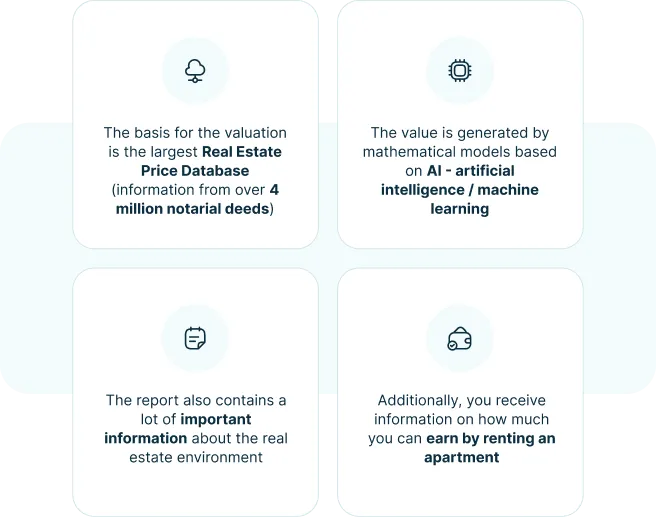
We built a high-performance valuation engine powered by machine learning models trained on 7.5 million notarial acts. The AI system analyzes property characteristics, location data, and historical transaction patterns to generate accurate price estimates. The architecture was optimized for sub-minute response times even under concurrent load.
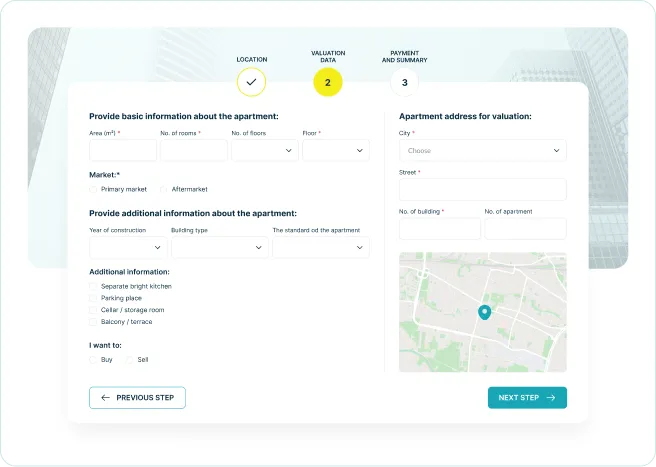
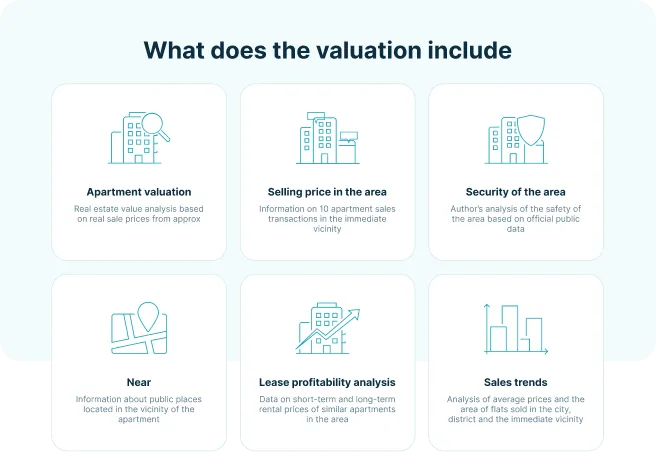
The platform features a comprehensive report generation system that produces detailed valuation documents. Each report includes the estimated property value, 10 comparable recent sales in the vicinity, a neighborhood safety score derived from official public statistics, nearby amenities and infrastructure mapping, and rental profitability analysis for both short-term (e.g., Airbnb) and long-term leasing.
We implemented a multi-level market analytics engine that provides trend analysis at three geographic scales — city-wide, district-level, and hyperlocal neighborhood. This gives users context for whether a property is priced above or below market trends and how values are shifting over time in their specific area of interest.
The data integration pipeline aggregates and normalizes data from diverse authoritative sources into a unified database. This includes property transaction records, geographic and demographic data, public safety statistics, amenity databases, and real-time market listings. The pipeline ensures that valuations reflect the most current market conditions available.
Transforming Property Valuation with AI
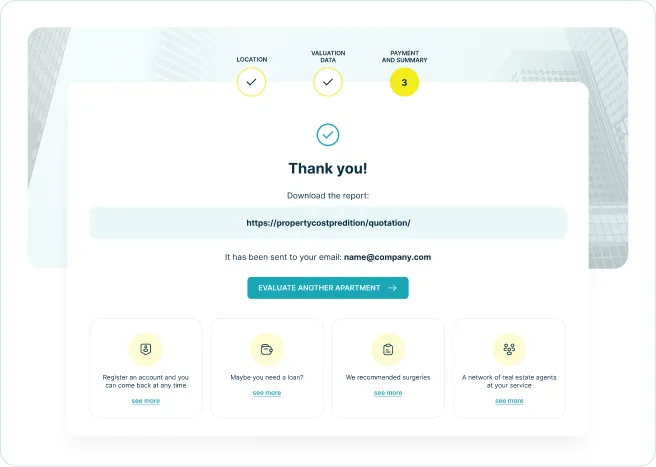
The client's vision of making professional property valuations accessible to everyone culminated in a platform that transforms how people assess real estate value in Poland. The solution processes complex AI models against the country's largest transaction database to deliver instant, data-rich property appraisals across 27 cities.
The platform stands out as a leading proptech solution by combining automated valuation models with rich contextual analytics — comparable sales, safety metrics, rental projections, and market trends — all delivered in an intuitive report format that non-expert users can understand and act upon.
The development process tackled significant technical challenges including real-time ML inference at scale, multi-source data integration, and presenting complex financial analytics in an accessible consumer interface. The architecture supports both individual consumers and bulk professional usage through a flexible report packaging system.
By leveraging AI and machine learning trained on over 7.5 million property transactions, the platform provides valuations grounded in comprehensive market data rather than subjective estimates. This data-driven approach gives users the confidence to make informed decisions whether buying, selling, or investing in Polish real estate.
As a result, the platform has established itself as a trusted property valuation tool, demonstrating how AI and big data can transform traditional real estate services. The system's combination of speed, accuracy, and analytical depth sets a new standard for automated property appraisal in the Polish market.
Start your AI agent project today
Request a call today and get free consultation about your custom software solution with our specialists. First working demo just in 7 days from the project kick‑off.
Matt Sadowski
CEO of Mobile Reality

Case studies
Explore our past successes and see our expertise in action with our real estate and proptech case studies. Discover how we've helped real estate businesses drive growth and success from AI-powered analytics to property management platforms.