MUSIC DISTRIBUTIONMusic Distribution Platform: Streaming, Rights Management, and NFT Minting
A comprehensive music platform built for creators, fans, and collectors. The system combines music streaming, digital rights management, NFT minting, and royalty collection into a single platform, enabling artists to capture their creativity, secure their rights, distribute to streaming services, and monetize their work.

Scope of work
Web development
Mobile development
Node JS
React JS
UX/UI Design
AWS Cloud
Genesis of the Project
The client built a music platform using patented technology to securely store, organize, and manage digital assets and creative rights. Their vision was to give independent artists and creators a unified toolset, from uploading and distributing music to streaming platforms, through minting NFTs for exclusive content, to tracking and collecting royalties across all channels.
Our team was engaged to enhance and extend the platform across web and mobile, building new features, improving the backend architecture, and integrating payment processing for the marketplace.
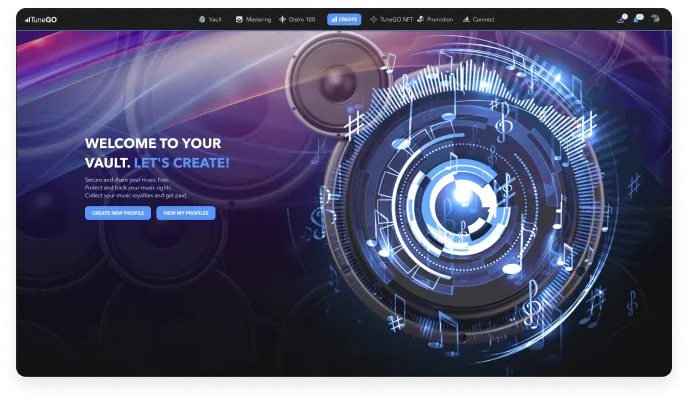
Unifying Streaming, Rights, and Blockchain
The main challenge was building a multi-faceted platform that spans music streaming, rights management, and blockchain-based NFT minting, each with distinct technical requirements. The streaming component needed robust media handling, the rights management required precise metadata tracking, and the NFT functionality demanded blockchain integration.
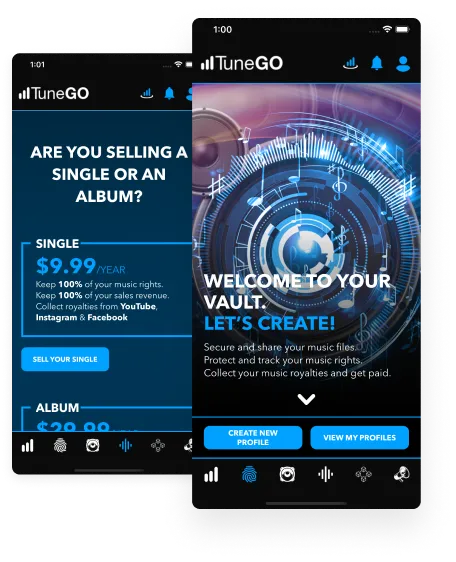
Expertises
Streaming solutions
Location
USA
Multi-Domain Platform Architecture
The primary goal was to create a unified platform architecture supporting three core data domains: user management (profiles, subscriptions, permissions), song management (uploads, metadata, distribution, rights), and analytics (streaming statistics, royalty tracking, engagement metrics).
We aimed to deliver both web and mobile experiences: the web application for content management and distribution workflows, and the mobile app for music discovery, streaming, and fan engagement.
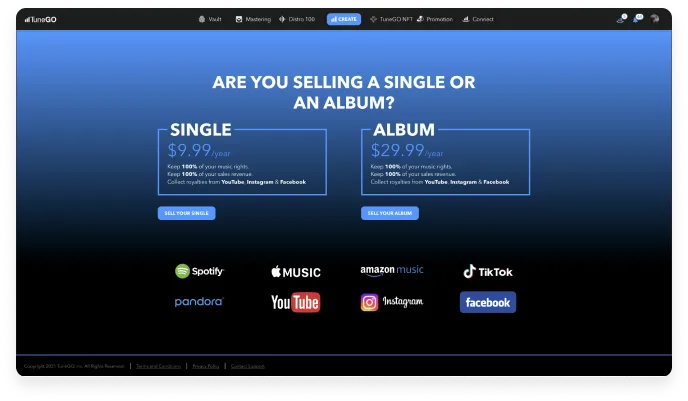
React, Node.js & Blockchain Stack
The platform was built with React.js for the web frontend, React Native for cross-platform mobile, and Node.js on the backend. We designed a database architecture around three core entities (Users, Songs, and Statistics), enabling efficient queries for streaming analytics and royalty calculations.
Payment integration with Stripe and PayPal powers marketplace transactions, subscription billing, and artist payouts. The infrastructure runs on AWS, providing the scalability needed for media streaming and the security required for financial transactions. Blockchain integration enables NFT minting for exclusive content and collectibles.
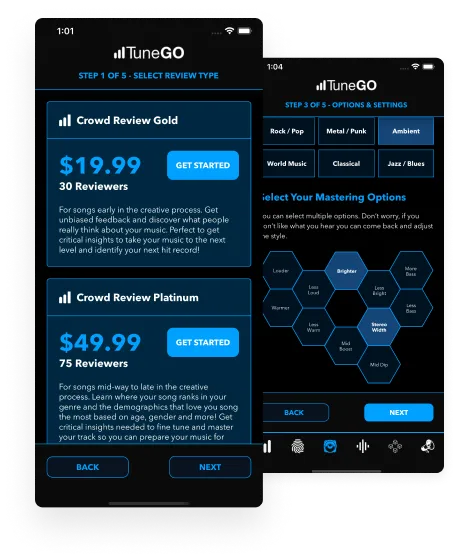
Summary
We enhanced and developed new features for a music distribution platform that unifies streaming, rights management, NFT minting, and royalty collection. The platform empowers creators with tools to manage their entire music lifecycle, from upload to monetization, through a single integrated system.
Built with React.js, React Native, Node.js, and AWS, the platform integrates Stripe and PayPal for payments and blockchain technology for NFT functionality, delivering a modern music industry solution for independent artists and creators.
Start your AI agent project today
Request a call today and get free consultation about your custom software solution with our specialists. First working demo just in 7 days from the project kick‑off.
Matt Sadowski
CEO of Mobile Reality

Case studies
Explore our past successes and see our expertise in action with our entertainment industry case studies. Discover how we've helped digital businesses drive growth and success from mobile apps to data analysis.



Frequently Asked Questions
It connects an artist's catalog to streaming services (Spotify, Apple Music, YouTube Music, Tidal, Amazon Music, Deezer) through their respective ingest APIs, handles metadata standardization (DDEX format), tracks royalty splits and payouts across collaborators, and provides analytics on plays, saves, and playlist adds. Modern platforms add NFT minting and direct fan monetization on top of the standard distribution layer.
NFTs in music have shifted from speculative collectibles to utility tokens: backstage access, presale rights, exclusive stems, royalty share. The technical pattern is unchanged — mint on a low-fee chain (Polygon, Base, Solana), pin assets to IPFS, and gate access through wallet ownership checks. Relevance has narrowed to artists with engaged direct-to-fan communities; broad consumer adoption never materialized, but the rails are stable enough to ship product on.
Each track has a splits manifest — producer, performer, songwriter, label, etc., each with a percentage. When royalties arrive from a streaming service (lump sum per period), the platform applies the splits, deducts platform fees, and pays each party via Stripe Connect or bank transfer. Tax forms (1099, withholding for cross-border payouts) get generated automatically. Splits must be versioned — re-running a payout from six months ago should reconstruct the splits as they existed then.
The streaming services consume DDEX ERN (Electronic Release Notification) XML for metadata. The upload pipeline validates: ISRC codes (track), UPC/EAN (release), audio format (typically WAV 44.1kHz/16-bit minimum), artwork dimensions (3000x3000 minimum), language and explicit-content flags, and writer credits. Catching errors at upload prevents rejections downstream — every store has its own quirks, and a release rejected by Apple Music can sit broken for weeks if not flagged early.
Standard build: React web + React Native mobile for the artist dashboard; Node.js API; PostgreSQL for catalog and rights data (relational queries on splits matter); S3 for masters and artwork; SQS-driven workers for upload validation, transcoding, and per-store delivery; blockchain libraries (ethers.js, web3.js) for the NFT path. Per-store ingest connectors are the messy part — each platform has different auth, formats, and reporting cadences.