MUSIC MARKETPLACEAudio Music Marketplace: Digital Platform for Creators, Labels, and Licensing
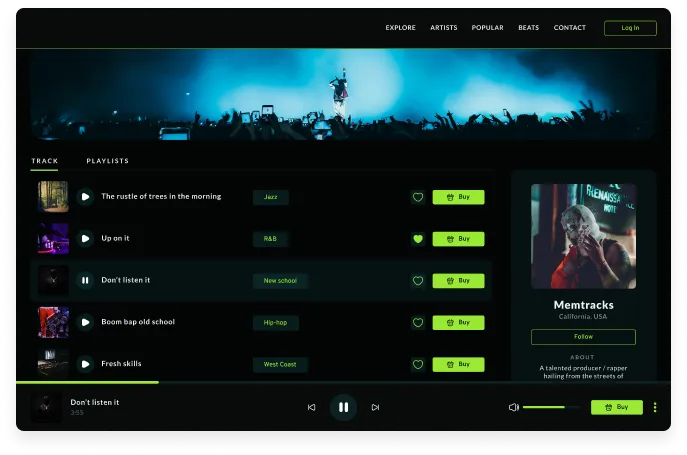
A global digital marketplace connecting the creative music community (producers, songwriters, and artists) with record labels, music publishers, and licensing companies. The platform manages digital asset storage, rights management, and split payments across a high-traffic web and mobile experience serving hundreds of thousands of daily users.

Scope of work
scopeOfWork.mobileDevelopment
React JS
React Native
UX/UI Design
AWS Cloud
Genesis of the Project
The client had established themselves as a home for some of the most talented producers and songwriters in the music industry. They needed a technology partner to build a scalable marketplace platform that could handle high-volume content transactions, complex rights management, and multi-party payment splits, all while delivering a seamless experience across web and mobile.
Our team was brought in to architect and develop the full platform (frontend, backend, and mobile) under tight timelines with a rapidly expanding feature set.
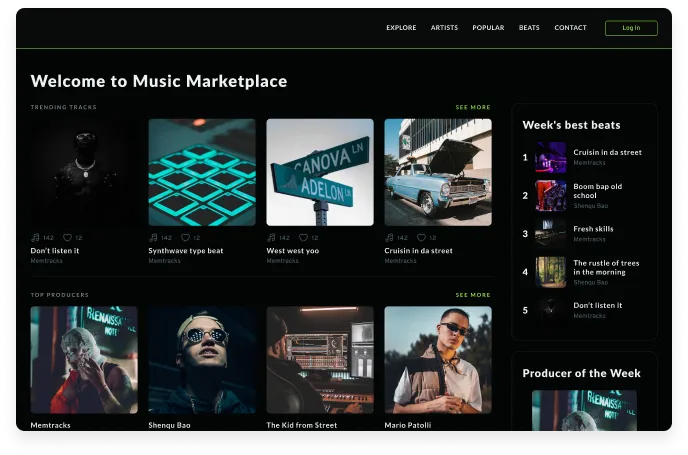
Scaling a Music Marketplace Under Tight Deadlines
The primary challenge was the enormous scope of features that needed to be delivered simultaneously across web, mobile, and backend. The marketplace required content upload and management, search and discovery, licensing workflows, user profiles, messaging, and transaction processing, all within aggressive deadlines.
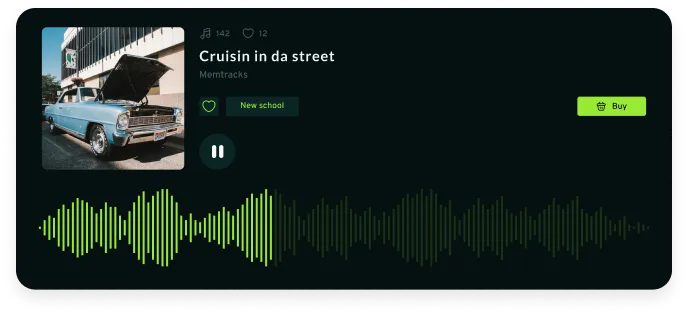
Expertises
Streaming solutions
Location
USA
High-Traffic Platform for Global Music Industry
The primary goal was to deliver a marketplace platform capable of handling hundreds of thousands of daily active users with consistent performance. The system needed to support high-volume content browsing, streaming previews, and real-time transactions without degradation.
We aimed to build a unified experience across web and mobile: the web application for content management and licensing workflows, and the React Native mobile app for on-the-go discovery and purchasing.
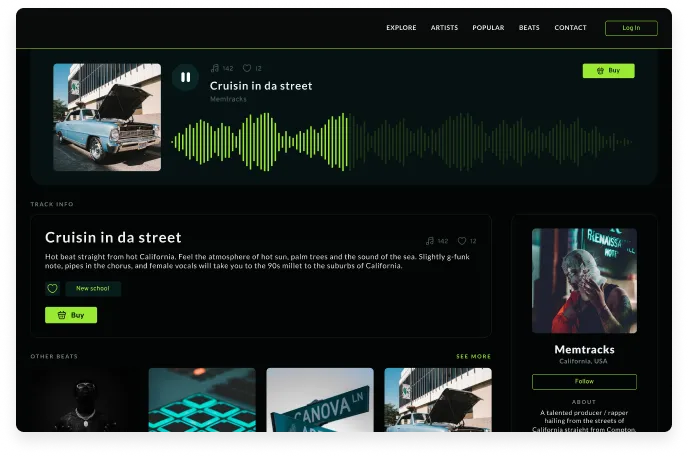
Full-Stack React, NestJS & AWS Architecture
The web application was built with React.js with server-side rendering (SSR) for optimal performance and SEO. SSR allowed us to utilize components on both client and server, significantly boosting development speed and page load times for a content-heavy marketplace.
The backend was powered by Node.js with NestJS and MySQL, providing a robust API layer for content management, user accounts, licensing workflows, and the split payment engine. The mobile application was built with React Native for cross-platform delivery, saving significant development time while maintaining native performance.
The entire platform runs on AWS cloud infrastructure, providing the flexibility and scalability needed for a high-traffic marketplace with global users.
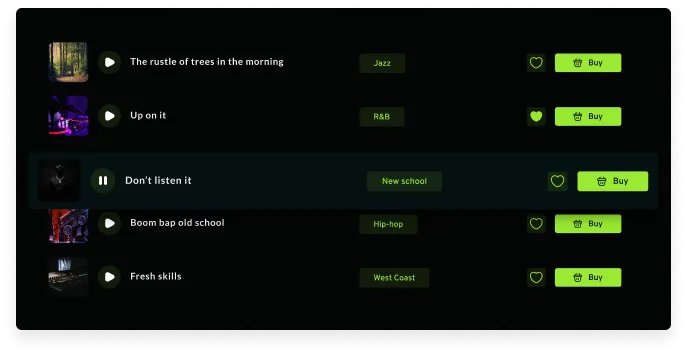
Summary
We delivered a full-stack digital music marketplace (web application, mobile app, and backend) that connects the creative community with the music industry. The platform handles complex multi-party payment splits, high-traffic content delivery, and cross-platform user experiences.
By leveraging React with SSR, NestJS, React Native, and AWS, we built a scalable foundation that supports hundreds of thousands of daily users while maintaining the performance and reliability required for financial transactions in the music licensing space.
Start your AI agent project today
Request a call today and get free consultation about your custom software solution with our specialists. First working demo just in 7 days from the project kick‑off.
Matt Sadowski
CEO of Mobile Reality

Case studies
Explore our past successes and see our expertise in action with our entertainment industry case studies. Discover how we've helped digital businesses drive growth and success from mobile apps to data analysis.



Frequently Asked Questions
A streaming service (Spotify, Apple Music) licenses a catalog and pays royalties for plays. A marketplace hosts content created by independent producers and songwriters and handles licensing transactions, sample sales, and stem downloads directly between creators and buyers (sync supervisors, producers, content creators). Core differences: per-asset rights metadata, multi-party payouts, and entitlement enforcement on each download.
Each track is associated with a splits manifest — producer 50%, songwriter 30%, label 20%, for example. On each sale, the platform calculates per-party amounts, applies platform fees, and uses Stripe Connect (or similar) to disburse funds to each connected account. Split changes need versioning so historical payouts remain accurate. Tax reporting (1099-K, VAT/MOSS) gets layered on top.
At minimum: royalty-free (single fee, broad use), exclusive licenses (locks the asset to one buyer), limited-territory, limited-duration, and sync licenses for film/TV/ads. Each license type maps to different metadata, pricing rules, and DRM/watermarking. A flexible rights engine pays off later when you add new license types without rewriting the checkout flow.
Three layers: (1) short-lived signed URLs (CloudFront / S3) so direct links expire; (2) per-buyer audio watermarking on the master file at download time so leaked files trace back to the source; (3) degraded preview streams (low-bitrate, watermarked) on the public listing page. Combined with clear license terms and DMCA workflows, this covers most realistic threat models without breaking the buyer experience.
Common pattern: S3 for storage with multipart uploads for large stems, CloudFront for CDN delivery with signed URLs, SQS + Lambda for the post-upload pipeline (transcoding to preview format, waveform generation, metadata extraction, watermarking job dispatch), and a NestJS / Node.js API behind it. React or React Native handles the buyer/seller UI. The pipeline has to be idempotent — uploads retry, conversions fail mid-flight, and the system has to tolerate that without orphaning files.