INVOICE AUTOMATIONAI Invoice & Accounting Automation: Hands-Off Document Processing from Drive to Bookkeeping
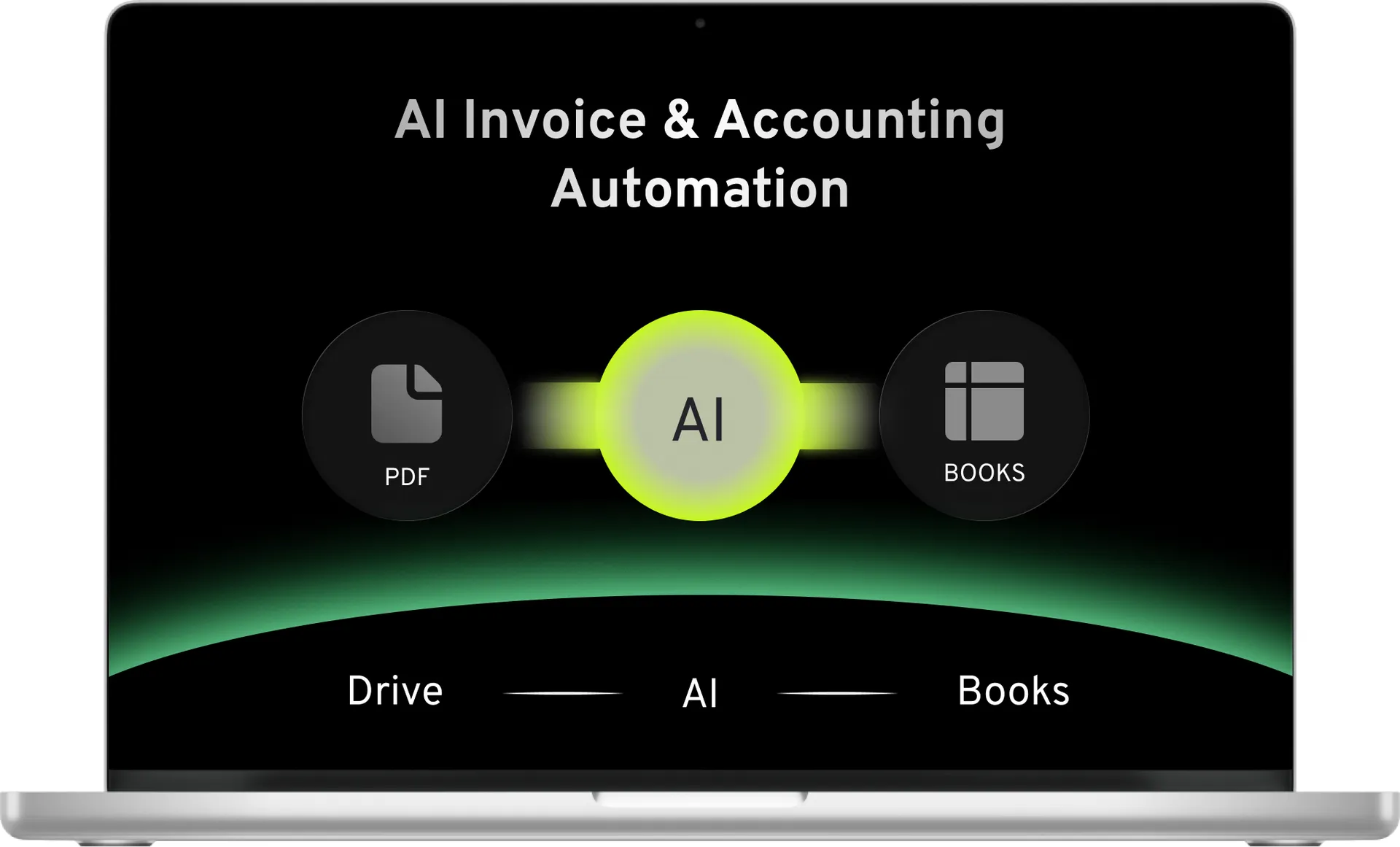
A fully automated, headless accounting pipeline that turns a messy folder of invoices, payslips, and receipts into clean, categorized bookkeeping records, with zero manual data entry. Documents dropped into Google Drive are read by OCR, classified and parsed by AI, currency-converted, and written straight into a structured monthly accounting sheet and the company's invoicing platform. It runs on a schedule, notifies the team on Slack, and asks for no clicks.
Scope of work
LLM / AI
Mistral OCR
Google Workspace
Why We Built It
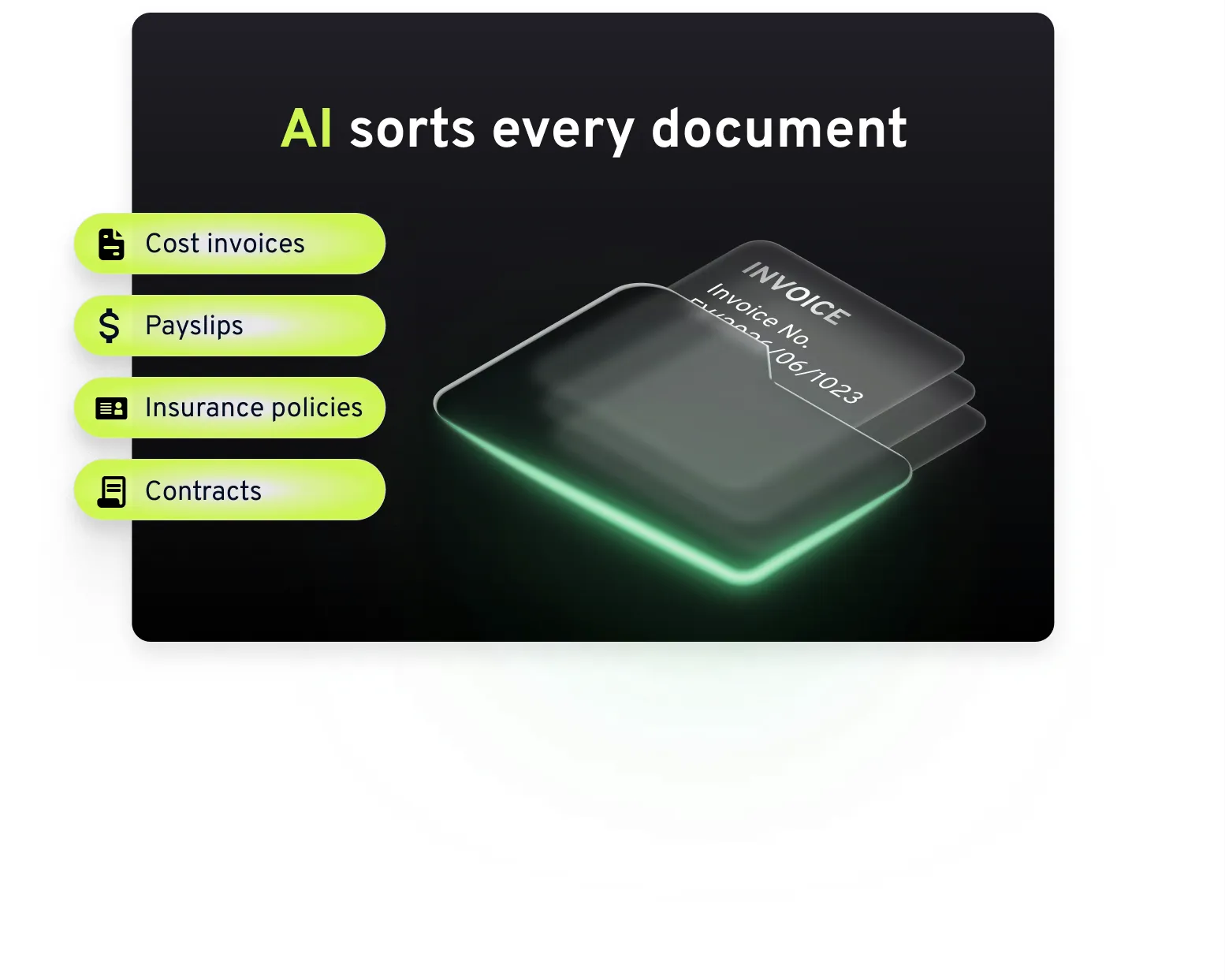
Every business drowns in accounting documents. Cost invoices, payslips, insurance policies, and contracts arrive as PDFs and phone photos scattered across shared drives. Someone has to open each one, read it, type the numbers into a spreadsheet, convert foreign currencies, and file it under the right month. It's slow, error-prone, and nobody wants to do it.
We built an AI-powered automation that removes the human from that loop entirely. Instead of yet another accounting SaaS with forms to fill in, the system watches the folders your documents already land in, understands each document with OCR and AI, and posts the result to your books automatically. There is no app to log into and no data to re-enter, because the workflow is the inbox you already use.
Reading Real-World Documents Reliably
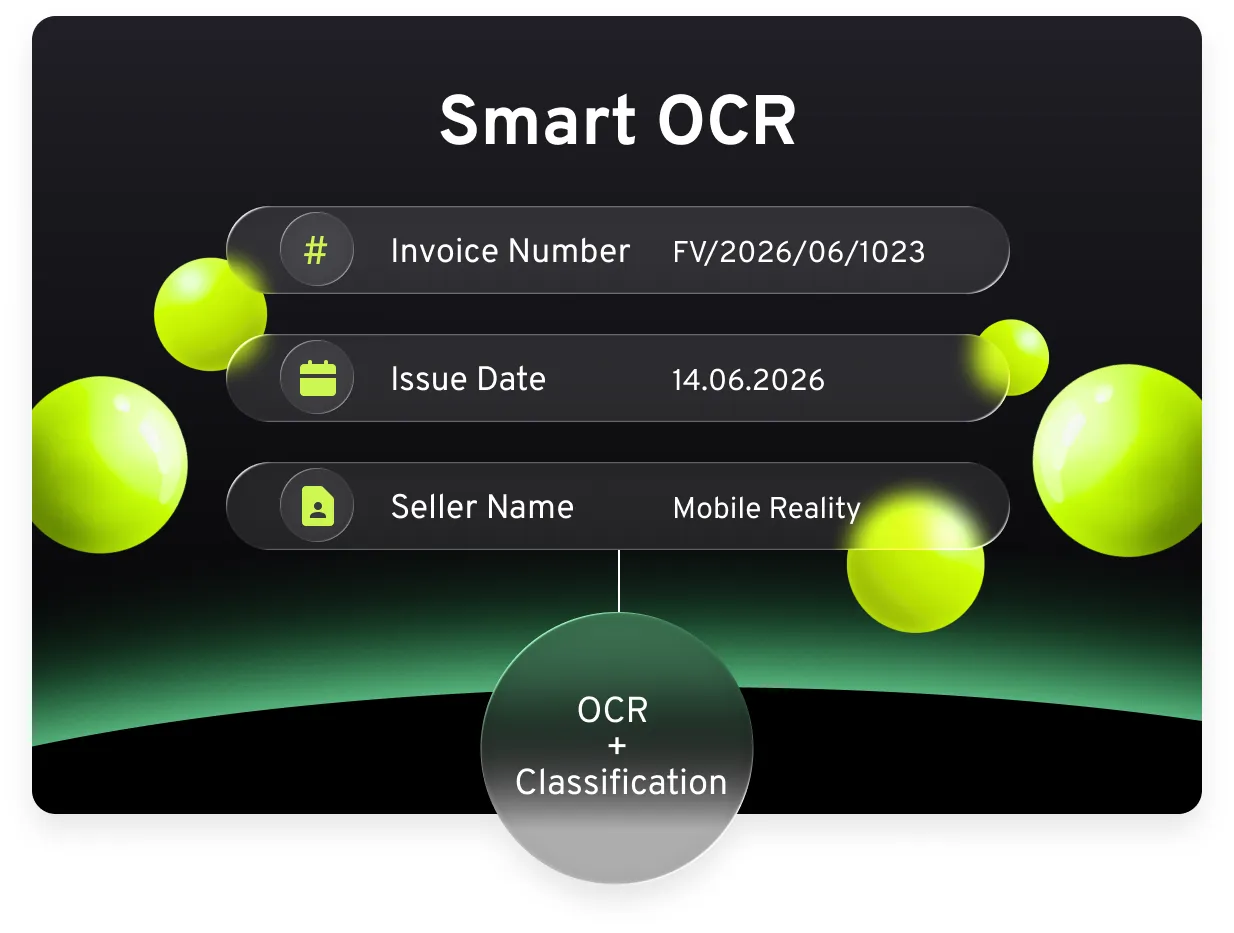
Real accounting documents are chaotic: scanned PDFs, blurry phone photos, multi-page invoices, DOCX files, and payslips in inconsistent layouts, many in Polish and some in foreign currencies. The first challenge was extracting clean text from any of these formats reliably. We use Mistral OCR to turn every supported file (PDF, PNG, JPEG, WebP, and auto-converted DOCX) into structured markdown text, regardless of source quality.
Expertises
AI Document Automation & Accounting Tech
Location
Poland
From a Folder of Files to Finished Books
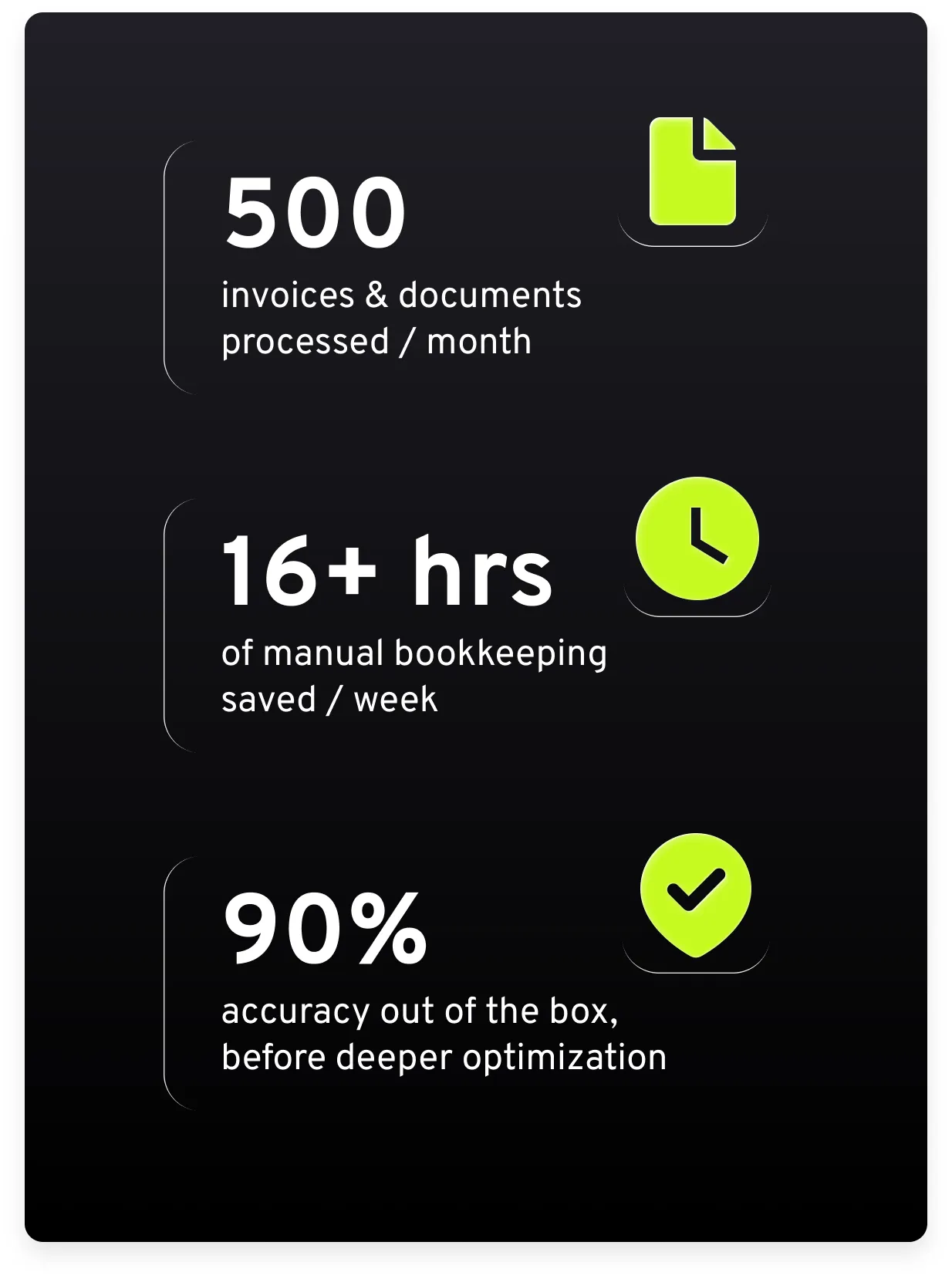
The core goal was to eliminate manual data entry for accounting, saving 16+ hours of bookkeeping every week while processing around 500 documents a month with no human intervention. Drop a file in Drive; it appears in the books. That was the entire user-facing brief.
The system had to handle three document streams in parallel: cost invoices, payroll (payslips, ZUS, contractor invoices), and miscellaneous expenses. Each is scanned from its own Drive folder on its own schedule, then classified, parsed, and written to the correct section of a monthly accounting sheet (sections I to XII).
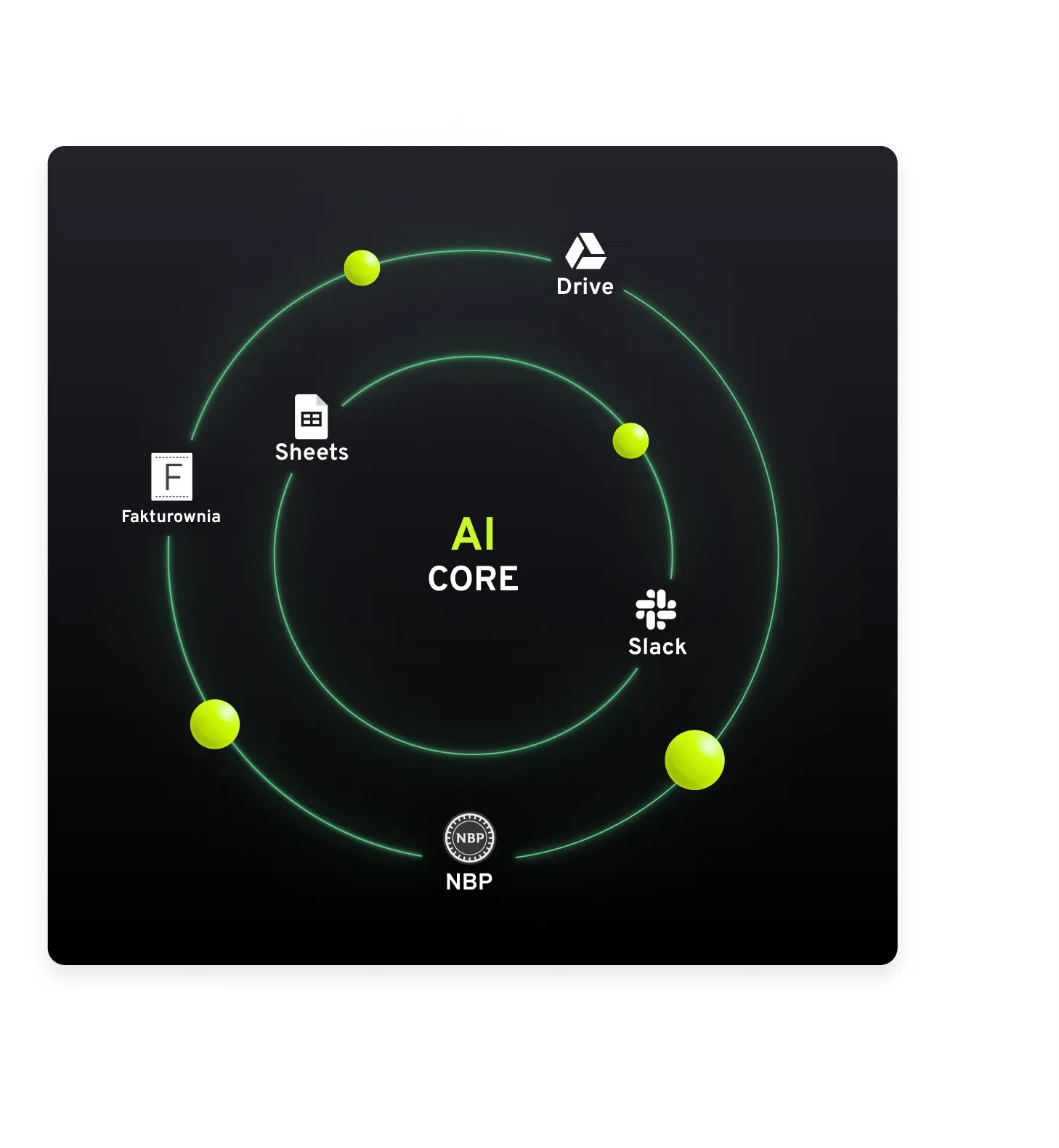
Beyond data entry, it had to close the loop with the tools the finance team already uses: pushing cost invoices into Fakturownia.pl as purchase invoices, pulling revenue invoices back out for a unified ledger, converting every foreign-currency amount via the NBP rate API, and rolling everything up into monthly summaries and a balance sheet.
Finally, the team should never have to check whether it worked. The pipeline sends a weekly financial report to Slack (revenue, costs, year-to-date balance) and emails alerts only on failures, surfacing problems without creating notification noise.
An AI Pipeline That Runs Itself
The whole system runs headless on Google Apps Script, with no servers, no UI, and no hosting. Time-driven triggers scan the relevant Drive folders every few hours, pick up new files, and walk each one through a staged pipeline with persistent per-file status logging, so processing is resumable and idempotent across runs.
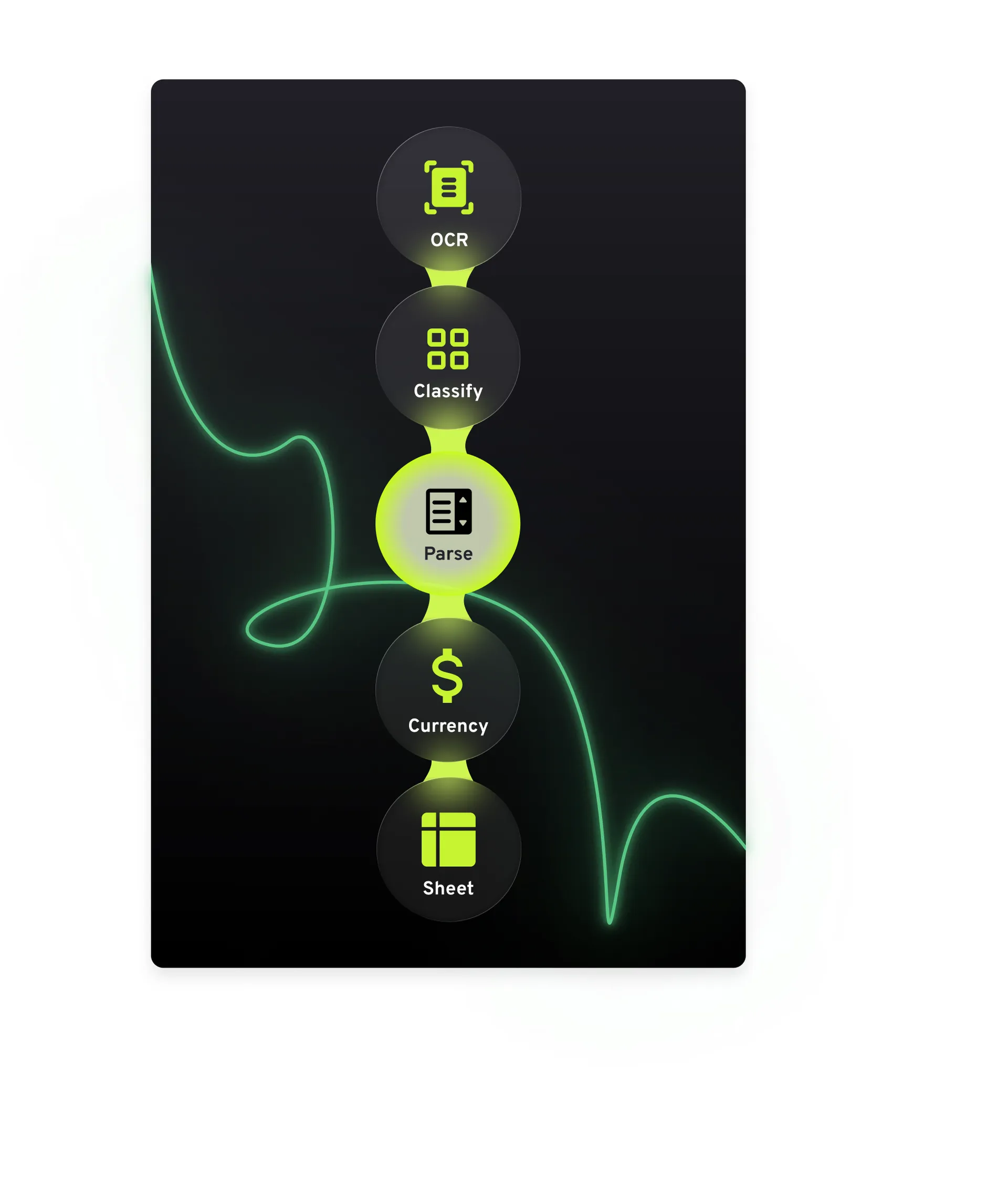
Each document flows through a four-stage AI pipeline. OCR (Mistral) extracts markdown text from PDFs, images, and DOCX. An AI classifier (Claude) determines the document type at temperature 0. An AI parser (Claude) extracts structured financial fields into JSON. A currency layer then resolves foreign amounts to PLN using cached NBP exchange rates dated to the document.
Parsed records are written into a structured Google Sheet, one per year, split into monthly cards with dedicated sections for invoices, payroll, and other expenses. Cost invoices are simultaneously pushed to Fakturownia.pl via its API. Revenue invoices are pulled back from Fakturownia, currency-normalized, and merged so the books reflect both sides of the ledger automatically.
A reconciliation and reporting layer keeps it honest. Monthly summaries and a balance sheet refresh on schedule, an audit job cross-checks the sheet against Fakturownia to catch discrepancies, and a weekly Slack report delivers the financial snapshot to the team. The entire stack is API-key-driven and configuration-first, so pointing it at a new set of folders and an invoicing account is a config change, not a rebuild.
AI That Does the Bookkeeping for You
This project shows what "AI automation" actually looks like when it earns its keep: not a chatbot, but an invisible pipeline that quietly removes a recurring, hated manual task. Documents go in one end as raw files, and clean, categorized, currency-correct bookkeeping comes out the other, saving 16+ hours a week across roughly 500 documents a month.
The architecture (Google Apps Script orchestration, Mistral OCR, Claude for classification and parsing, and direct integrations with Fakturownia, NBP, and Slack) is a production-grade blueprint for any document-heavy back-office process. The same pattern applies to expense management, contract intake, claims processing, or any workflow where documents arrive faster than people can type them.
Because it's serverless and configuration-driven, it deploys without infrastructure and adapts to a new business by pointing it at different folders and accounts. There's nothing to host and no UI to maintain, so the automation lives inside tools the team already has.
Most importantly, it's built to be trusted with real money: deterministic AI settings, per-document classification before extraction, currency normalization against an authoritative source, status tracking, automatic retries, and failure alerts. AI does the reading and typing; the design makes sure it does so accountably.
Start your AI agent project today
Request a call today and get free consultation about your custom software solution with our specialists. First working demo just in 7 days from the project kick‑off.
Matt Sadowski
CEO of Mobile Reality

Case studies
Explore our past successes and see our expertise in action with our AI and automation case studies. Discover how we've helped companies replace manual back-office work with production-grade AI pipelines.