EXFLUENTIALExfluential — Content Management & Social Media Distribution Platform for Healthcare
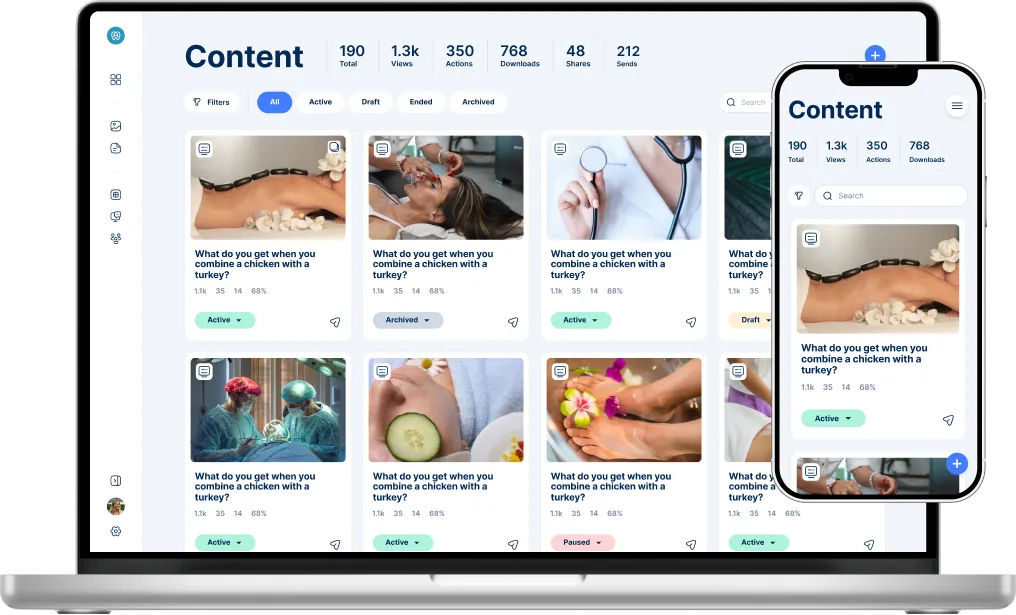
Exfluential is a comprehensive content management and social media distribution platform designed for healthcare and life science companies. The platform enables providers to manage branded content hubs, schedule multi-channel social media posts, process print-on-demand orders, and track marketing performance — all from a centralized dashboard with role-based access control.
Scope of work
Web development
Mobile development
Node.js / NestJS
Vue.js / Nuxt
UX/UI Design
Social Media Integration
Genesis of the Project
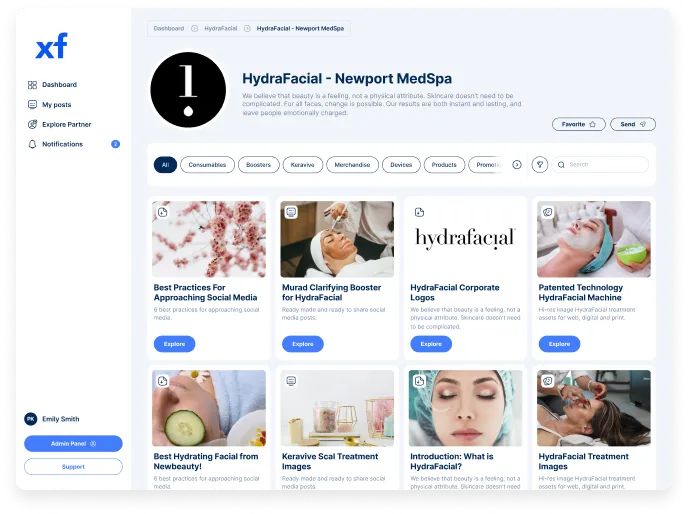
Exfluential was founded with a mission to help medical device, pharmaceutical, and life science companies share vital information with their patients and colleagues seamlessly. The platform transforms how healthcare organizations manage and distribute marketing content — from social media campaigns to physical printed materials.
Our team was brought in to revamp the existing platform, modernize the tech stack, and significantly expand its capabilities. The project evolved from a basic content sharing tool into a full-featured marketing operations platform with multi-social posting, print fulfillment workflows, Stripe-powered payments, and deep analytics — all tailored to the compliance-sensitive needs of the healthcare industry.
Scaling a Multi-Channel Healthcare Marketing Platform
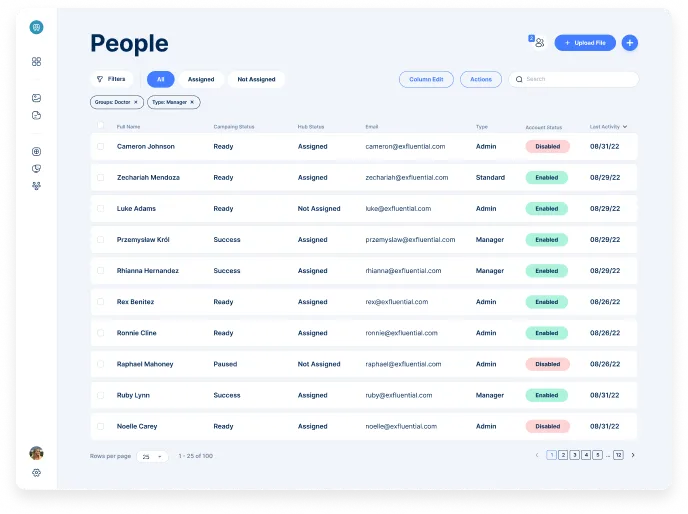
The platform needed a complete UX overhaul to handle its growing feature set — the existing interface couldn't scale to accommodate content hubs, social scheduling, print orders, analytics, and multi-level user management without becoming overwhelming.
Expertises
Healthcare & Lifestyle
Location
USA
Centralizing Content, Social, and Print Operations
The primary goal was to transform Exfluential into a centralized marketing operations platform for healthcare companies — combining content management, social media distribution, print fulfillment, and performance analytics in one integrated solution. The platform needed to reduce the friction of managing marketing materials across multiple channels and formats.
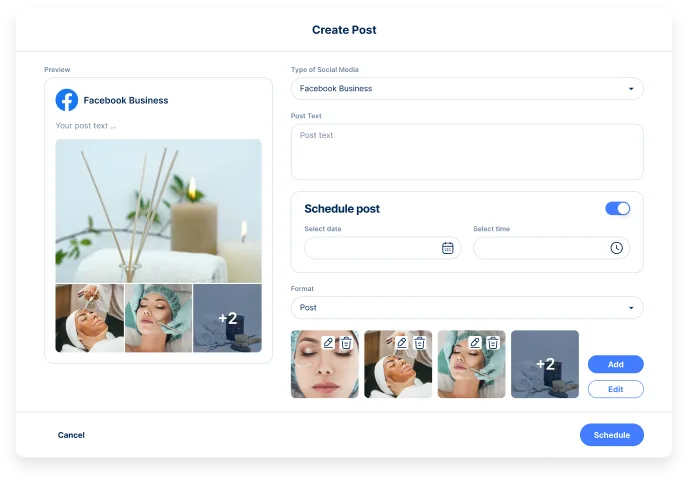
We aimed to build a robust social media scheduling engine supporting five major platforms (Facebook, Instagram, LinkedIn, Twitter/X, TikTok) with OAuth-based authentication, post scheduling via cron jobs, and unified analytics that aggregate engagement metrics across all channels into actionable marketing insights.
The print workflow needed to be production-ready: canvas-based content customization using Konva, order management with vendor notifications, Stripe payment processing with tax code handling, and FedEx shipping integration for rate calculation and package tracking.
The platform required a comprehensive email communication system powered by SendGrid with 27 configurable templates covering onboarding sequences, campaign notifications, order confirmations, and account management — all customizable per organization and branded to each client.
Vue/Nuxt Frontend with NestJS & GCP Backend
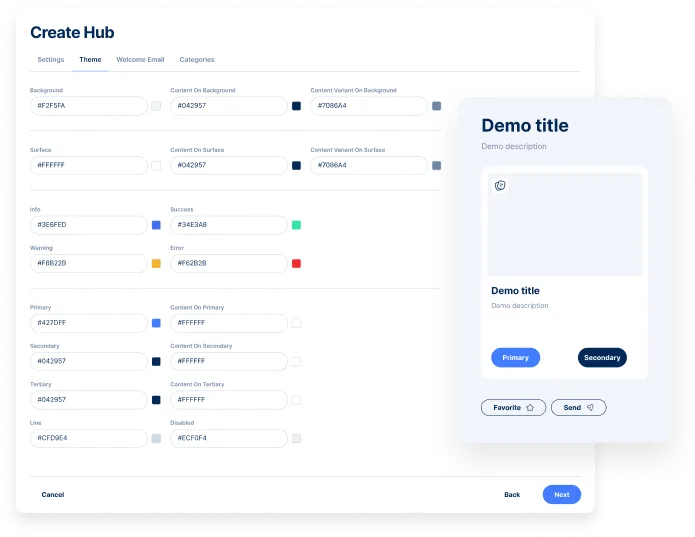
The frontend was rebuilt with Vue 3 and Nuxt 4 (SSR), delivering a fast, SEO-friendly application with Tailwind CSS for consistent styling and Pinia for state management. The admin interface features TipTap rich text editing for content creation, Konva canvas rendering for print design customization, and PostHog analytics for user behavior tracking. Firebase SDK handles authentication and cloud storage.
The backend runs on NestJS with a RESTful API architecture, using MikroORM with MySQL for data persistence. Social media integrations connect to Facebook/Meta (OAuth + Ads API), Instagram, LinkedIn, Twitter/X, and TikTok Ads through dedicated service modules. Google Cloud Tasks powers the scheduled job system for automated post publishing, analytics aggregation, and email campaign delivery.
The monetization and fulfillment pipeline integrates Stripe for payment processing (including tax codes and webhook handling), FedEx APIs for shipping rates and tracking, and a multi-step order workflow routing through CSM approval to printer fulfillment. Budget tracking and co-op tier management provide financial controls for partnership arrangements.
The platform is deployed on Google Cloud Platform — App Engine for application hosting, Cloud SQL for the MySQL database, Cloud Storage for media assets, and ImgProxy for on-the-fly image optimization. SendGrid handles all transactional and marketing email delivery. Sentry provides error monitoring across all environments (development, staging, production), with HubSpot CRM integration for lead management.
Summary
Exfluential demonstrates how a purpose-built platform can transform marketing operations for healthcare companies. By centralizing content management, social media distribution, print fulfillment, and analytics into a single solution, the platform eliminates the fragmentation that typically plagues multi-channel marketing in compliance-sensitive industries.
The technical architecture — Vue 3/Nuxt 4 frontend, NestJS backend, MySQL with MikroORM, and Google Cloud infrastructure — provides the scalability and reliability needed for a platform handling social API integrations, payment processing, and print fulfillment workflows simultaneously.
With five social platform integrations, canvas-based print customization, Stripe payments, FedEx shipping, SendGrid email automation, and comprehensive analytics, Exfluential equips healthcare marketing teams with everything they need to promote products effectively while maintaining the control and compliance their industry demands.
Start your AI agent project today
Request a call today and get free consultation about your custom software solution with our specialists. First working demo just in 7 days from the project kick‑off.
Matt Sadowski
CEO of Mobile Reality

Case studies
Explore our past successes and see our expertise in action with our data science and healthcare case studies. Discover how we've helped healthcare and other industries drive growth and success from mobile apps to data analysis.


Frequently Asked Questions
Healthcare content has constraints that generic CMS platforms don't address: regulatory review workflows (Medical-Legal-Regulatory / MLR approval before publication), versioning of approved claims, mandatory expiration dates on clinical content, audit trails proving who approved what when, and channel-specific compliance (pharma promotion rules differ by country). Generic content tools let you publish anything; healthcare CMS makes it impossible to publish unreviewed content by accident.
The platform enforces rules at the publication step: only MLR-approved content can be queued for distribution, comments and engagement get moderated through configurable rules (some markets require pharma to remove off-label discussion), and adverse event reporting workflows trigger when patients post reactions. Distribution itself uses the official APIs (Meta Graph, LinkedIn Marketing, Twitter/X) — no headless browser scraping, which would be both fragile and a compliance red flag.
Two main roles: (1) a sales-rep app that lets field reps present approved content during clinic visits (offline-capable, with built-in usage analytics), and (2) a HCP-facing app for credentialed healthcare professionals to receive ongoing education and product updates. Both require gated authentication (NPI verification or equivalent), local content cache for offline use, and event logging back to the central platform.
Common pattern: Vue.js / Nuxt or React for the editorial UI, NestJS / Node.js for the backend with strict role-based access control, PostgreSQL with row-level security to enforce tenant isolation, and a workflow engine (Camunda, Temporal, or in-house) for MLR approval flows. File storage on S3 with audit logging via CloudTrail. Identity ties to enterprise SSO (Okta, Azure AD) since most pharma customers require it.
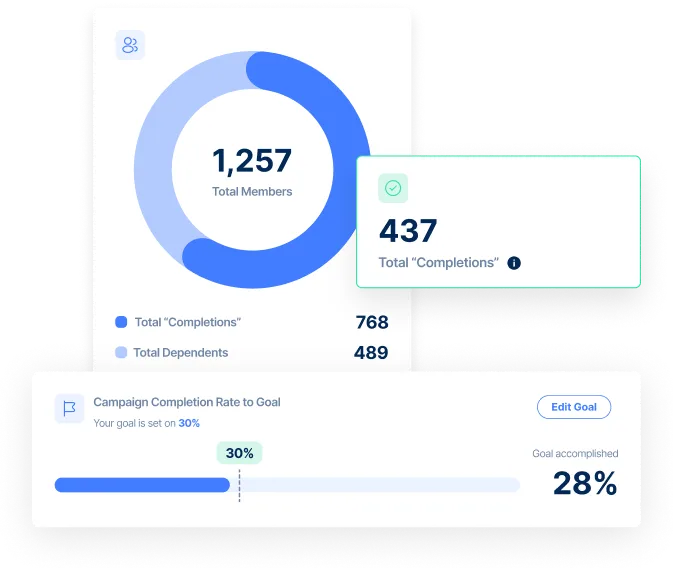
Standard engagement metrics matter (impressions, clicks, dwell time) but the healthcare-specific ones are: HCP reach by specialty, content half-life within compliance-approved windows, sales-rep utilization (which reps presented which content, and where), and adverse event mention rate triggered from patient-facing posts. Reporting needs to feed both marketing dashboards and the regulatory team's quarterly compliance reviews.