FLAREEFlaree: AI-Powered Employee Recognition Platform with Collectible Rewards
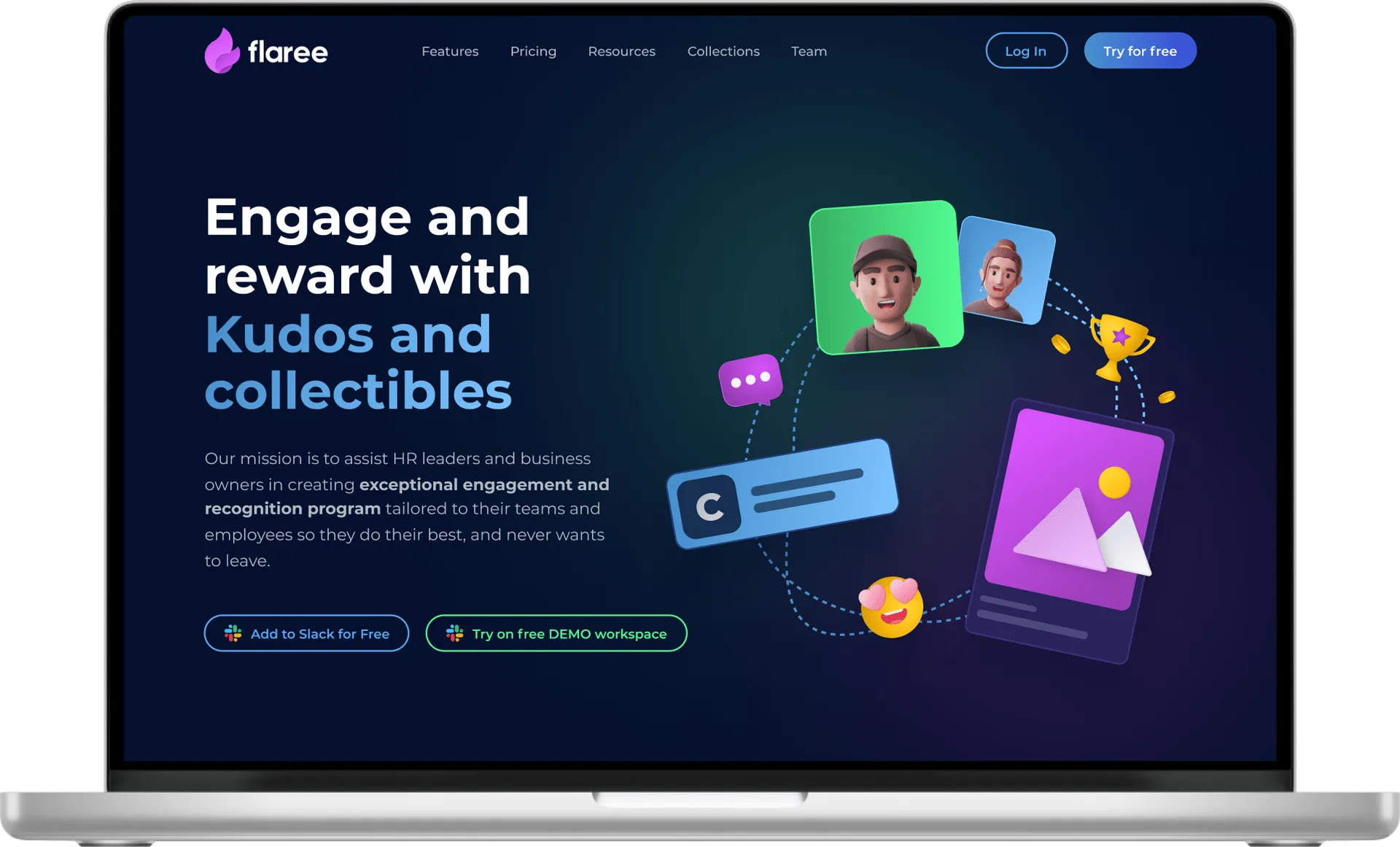
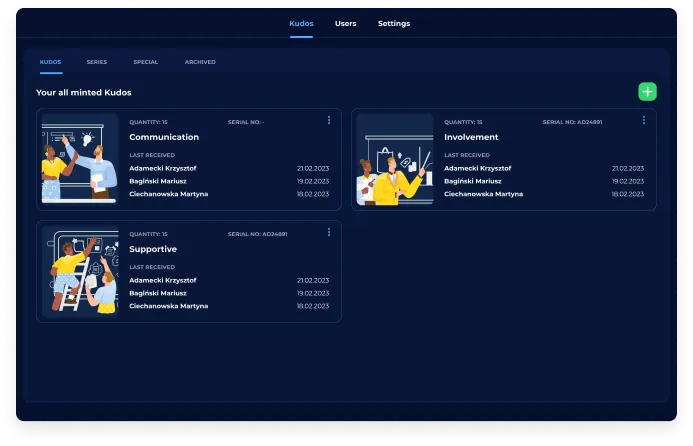
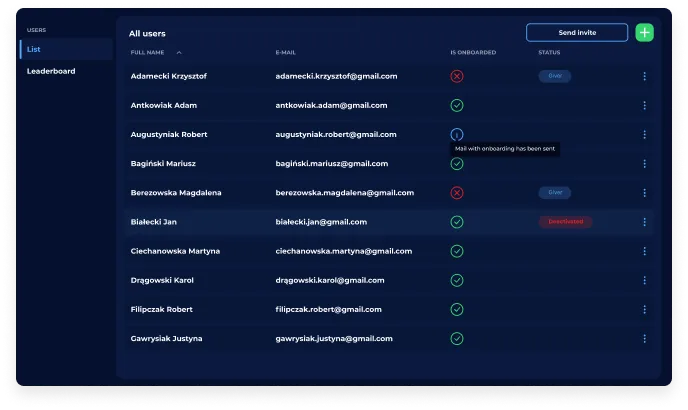
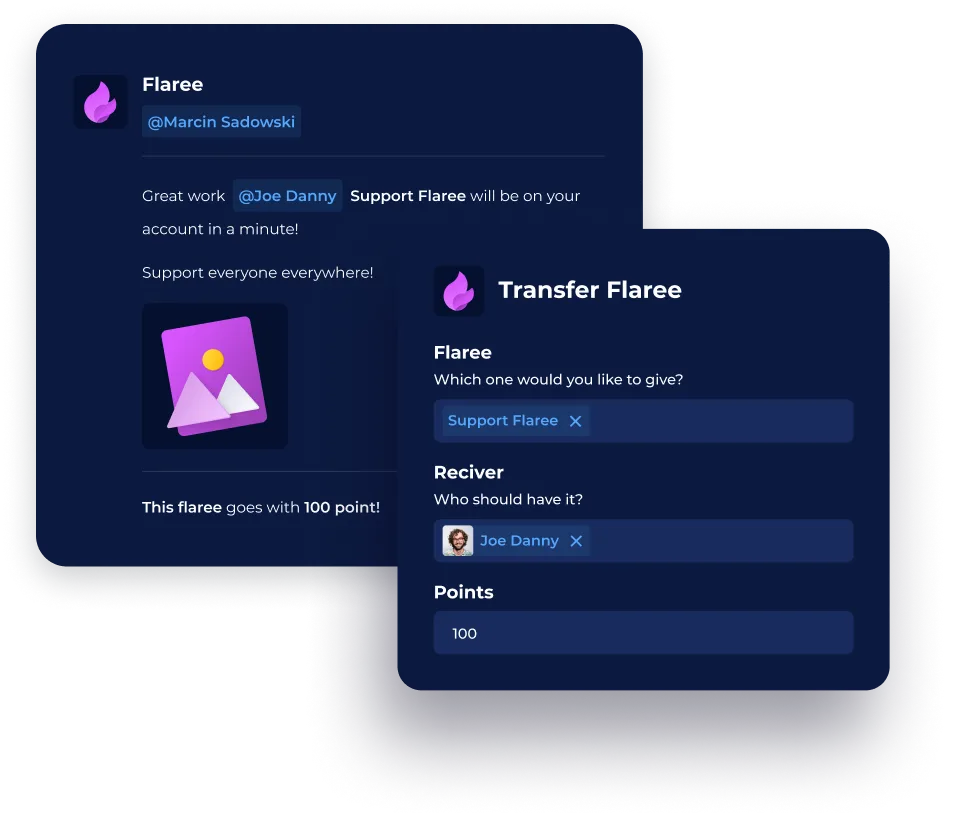
Flaree is Mobile Reality's own AI-powered employee recognition and engagement platform. The system enables teams to send peer-to-peer recognition (Flarees), award achievement badges, track engagement via leaderboards, and generate AI-powered recognition cards, creating a culture of appreciation backed by gamification and analytics.
Scope of work
OpenAI
Blockchain
Node JS
React JS
UX/UI Design
AWS Cloud
Genesis of the Project
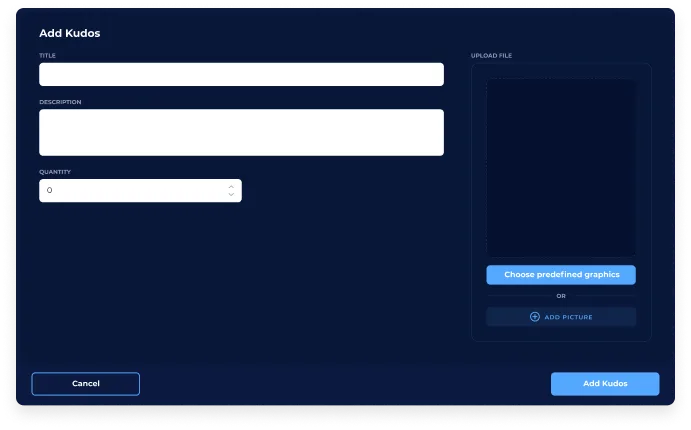
Flaree is one and the first worldwide benefits program for employees based on AI-generated content and blockchain technology. The Flaree app allows HR departments and company owners with help of AI to create branded Flarees as benefits and rewards for the company's employees.
Challenge
The main challenge of this project was creating a platform connected to Flow blockchain, Slack services, IPFS, and other services to make the app that can be used in any environment. Stability and scalability was one of our fundament. As payment system we used Stripe.
Expertises
AI-gen Developers & Creators
Location
Poland
Main goals
The main goal of this project was to create the first worldwide benefits program for employees based on AI-generated content and blockchain technology. The platform enables HR departments and company owners to use AI to create branded Flarees as benefits and rewards for their employees, with seamless integration to Flow blockchain, Slack services, IPFS, and other services such as Make or Zappier for universal compatibility across any environment.
Solutions
Our solution involved building a comprehensive platform that integrates with Flow blockchain and Blocto wallet for secure Collectibles transactions. We developed a robust tech stack consisting of a Next.js frontend application with GraphQL API integration, a NestJS backend application for business logic, and Terraform for infrastructure management. For decentralized storage, we implemented Pinata IPFS integration. To ensure seamless automation and cross-platform compatibility, we integrated Make and Zapier services, enabling automated Flaree creation and distribution to employees across any environment while maintaining the stability and scalability requirements.
Summary
We successfully delivered the first worldwide benefits program for employees based on AI-generated content and blockchain technology. Our comprehensive platform integrates Flow blockchain and Blocto wallet for secure Collectibles transactions, featuring a robust tech stack with Next.js frontend, NestJS backend, GraphQL API, Terraform infrastructure, and Pinata IPFS for decentralized storage. The solution enables HR departments and company owners to create branded Flarees using AI, with seamless automation through Make and Zapier services for universal compatibility across any environment while maintaining the stability and scalability requirements.
Start your AI agent project today
Request a call today and get free consultation about your custom software solution with our specialists. First working demo just in 7 days from the project kick‑off.
Matt Sadowski
CEO of Mobile Reality

Case studies
Explore our past successes and see our expertise in action with our custom software development case studies. Discover how we've helped various industries drive growth and success from mobile apps to data analysis.


Frequently Asked Questions
Recognition built into HR suites (Workday, BambooHR) treats it as a checkbox. Standalone recognition platforms compete on frequency, peer-to-peer dynamics, and emotional weight — a personalized AI-generated reward lands differently than "manager nominated you for employee of the month." The 2026 shift: AI-generated branded content (custom artwork, video clips, on-brand messages) replaces generic gift cards, raising perceived value while keeping per-recognition cost low.
The pipeline: HR uploads brand assets (logo, palette, voice guidelines) and sets reward themes; an LLM generates the text (recognition message, occasion-specific copy); an image model (DALL-E, Stable Diffusion, Imagen) renders branded artwork on the theme; a moderation pass checks for brand-safety. The result is a unique digital collectible per recognition event, generated in seconds, costing fractions of a cent in API spend. Output is reviewed by HR before going live, with a fallback library for fully-automated cases.
Blockchain provides provable scarcity and portability — a recognition token an employee earns at company A can move with them, signaling track record. In practice, most companies don't need a public chain; a private ledger or signed credential (e.g., W3C Verifiable Credentials) gives the same auditability without gas fees and consumer wallet UX. Public-chain minting (Polygon, Base) is reserved for programs where transferability and external verification matter.
Direct metrics: recognition frequency per employee, peer-to-peer vs. manager ratio (peer recognition correlates with engagement), and redemption / engagement rate on rewards delivered. Indirect: changes in eNPS, voluntary turnover delta vs. baseline, and engagement-survey score movement. The honest answer is that recognition impact compounds over 6–12 months — short-term ROI claims tend to be overstated, but compound effects on retention are real.
Common build: React web app + admin console; Node.js backend with OpenAI (or Claude) for content generation; Stripe for billing the employer side; Firecrawl or similar for ingesting brand assets from corporate sites; AWS for hosting (ECS, RDS, S3). For the blockchain layer: ethers.js or viem for chain interaction, with a managed RPC provider (Alchemy, Infura) so you don't run nodes. Background queues (SQS) handle async generation jobs.